A fisherman in Newport Beach, California stabs a sea lion to death with a steak knife for stealing his bait...and on the top NW fishing forum he is applauded! One neanderthal even likened this guys killing of the sea lion to the civil disobedience of Rosa Parks!!!! On a fly fishing forum a thread about native Americans netters on the Columbia runs for several days with the majority of posters railing against the tribal harvest with some posts bordering on racism. My God!!! what is wrong with these people? Are we so self absorbed that the ends justify the means no matter what?
I could fill this blog with examples of "me first" posts by sports anglers. We, and I include myself in this group because I sports fish, whine, gripe, threaten and generally ridicule those that don't agree that we sports anglers are entitled to harvest fish above and beyond every other fish resource user group out there.
"We" go into spring chinook salmon allocation hearings with this gigantic feeling of entitlement. The government owes us fish after all and no one should be able to take any without us getting our lion's share first and just screw everyone else!
Pacific northwest native American tribes ancient heritage and culture revolves around the returning Columbia river salmon. We brought disease, introduced alcohol, took their fish and dammed their river and some wonder why they are suspicious of the white man!
I have no problem with the fish the tribes get and since it's federally mandated for them to get 50% of the fish those who continue to complain about it are wasting their breath.
Another example of our screwed up priorities is the reaction to the removal of Marmot dam on the Sandy river. On the same hugely popular northwest fishing forum there are those who are afraid that the potential return of more wild fish will cause them to not be able to kill fish and thus satisfy their greed.The same people who complain that they aren't getting their share of fish are those same ones who sit on their collective asses and do nothing when it comes to conservation issues. Oh sure there are those who put up a big show about how concerned they are about wild fish but when it comes right down to it they are just as lazy and just as complacent as those who do nothing. The fact that they are clueless is just an example of how lazy they really are.
So to wrap this bitch session up let me just say that we are obligated as so called sportsmen to respect the resource we all enjoy and do all we can to preserve it and protect it. Remember the earth is not ours to plunder and waste! We need to do better before it's too late.
Sunday, July 29, 2007

Wednesday, July 25, 2007
The Old Man and The Kid

The old man looked forward to his day on the river with the kid as he gathered up his rod and headed out in pursuit of trout.The kid was always on the river waiting for him in the quiet hush of the summer low stream. He was quite fond of the kid and knew him as well as anyone did. He enjoyed the kid's wry sense of humor and often found himself chuckling at something the kid said or did.
He saw that the kid was impetuous and sometimes brash but that didn't bother the old man much because it reminded him so much of himself after all.The kid was a likeable young man that laughed easily and enjoyed the moment he was in. He would not plan ahead but the old man knew that it was all a part of his charm and that he no doubt would carry that trait into old age.
You see he and the kid had a lot in common. They both lost their father when they were just teenagers. The old man knew that the kid had not gone through the grieving process as he did, but he knew he would someday. He knew the kid would think a lot about his father and his father would often be in his dreams for years afterwards. The death of his father just did not seem to register much with the kid right now though and the old man wished that he could say or do something that would spare the kid the sadness that would come when it all came home to him years after his father had died. It happened to him and he knew it would be tough on the kid. He knew the kid would miss the companionship that a father provided and would miss the counsel that only a parent could give.
It bothered the old man though, that the kid never took the time to enjoy his days on the river. The kid never appreciated the beauty that surrounded him as he fished the rivers of his youth. So many times the old man wanted to tell the kid to slow down and take it all in. He wanted to tell him to look at the trees and the river and everything around you because it's not just about catching a lot of fish after all. He wanted to tell the kid to be aware of how lucky he was because it will not always be like this...he just couldn't tell him though because the kid was not one to take advice very well.
He could see that the kid had times of great joy and deep sadness ahead of him. For all the bad choices the kid made there would be many good choices to balance his life out. It did not, however, keep the the old man from grimacing at the bad choices the kid did make and the old man knew they were irrespondsible and immature. The old man guessed the kid would just have to find that out just as he did. He also knew that the kid would struggle with self confidence,doubt and even depression as he grew older.
The kid was in fact a constant companion to the old man as they wandered the rivers in search of trout and steelhead. It was too bad, the old man thought, that the kid was never able to help him through those gloomy winter days when the old man
felt so alone and sometimes even sad. However, just like clock work, the kid was always ready to go when the warmth of the sun returned in the spring.
The old man sadly knew that there would come a day when he and the kid would no longer wade the coastal streams in search of trout or hike up the Deschutes canyon together. He knew the kid would move on and he would not be there to help him along in his journey through life. He took satisfaction in knowing the kid would be alright without him though. He just wondered about the day when the memory of his youthful companion would be faded and confused.
The old man knew that one day the kid would appreciate the beauty of the river and the fish that swam there. He knew the kid would appreciate a finely made bamboo fly rod and the joy of a rising trout and the old man took comfort in that.
The old man moves slower these days but he remembers the time when he, like the kid, could go anywhere he wanted. A time when he didn't have to pick the places he cast his fly just because it provided easy access to the river. The old man knew that, unlike the endless flow of the river he would have the joys and sorrows he knew was finite and only here for such a short time. He remembers that kid of so many years ago and was glad they got the chance to know each other finally.
Tuesday, July 17, 2007
Trout Grass

I have a love affair bamboo fly rods.There is nothing like fly fishing one of these rods. This film "Trout Grass" captures the essence of what I have been saying. Here is a short outline of the movie
For many anglers, a fly rod is more than a fishing instrument. It's an antenna, capturing signals of the natural world. But what of the process that turns ordinary materials into extraordinary tools? And why do people around the world continue to spend their days happily wading in rivers if they do not keep what they capture?
Unveiling the magic of international camaraderie, fine craftsmanship and flowing water, Trout Grass tracks the 10,000-mile journey of bamboo around the world. From a lush forest in China's Guangdong Province to a rustic workshop in Montana this film follows the transition of bamboo from a living plant to a finished fly rod. As a renowned rod maker treks to the source of his inspiration and a craftsman half-way around the world feels the "spirit of the bamboo world" we find what it takes to convert a piece of grass into a six-sided baton ready to conduct an orchestra of trout and water.
This documentary highlights Hoagy Carmichael on his first visit to China, where he experiences the country's mystical bamboo forests. As a legendary split-cane fly rod craftsman and author of the art's seminal study (A Masters Guide to Building a Bamboo Fly Rod, with Everett Garrison), these far-off lands have fueled Hoagy's dreams for over 40 years.
While in China we follow the hands of a bamboo importer who travels to a remote Chinese village to individually sort through thousands of bamboo poles. He is looking for poles perfectly suited for bamboo rod makers around the world.
In Montana, we see master-builder Glenn Brackett tap into "the power of unseen hands" in his shop, while converting this hardy piece of grass into a fly rod. The result is an instrument so revered for its strength, precision and beauty one wonders if trout feel lucky when caught and released by one of Glenn's rods.
From the hands of a builder to the hands of an angler
Monday, July 16, 2007
A Victory for Wild Salmon
Once again we have to use the legal system to keep the renegade Bush administration from raping yet another natural resource.

From Earthjustice
PORTLAND, Ore. – A federal judge has recommended that the Bush administrations decision to remove endangered species protections for Oregon Coast coho salmon be declared illegal. The court recommended that coho’s legal “threatened” status be reviewed and a new listing decision be finalized within 60 days. Restoration of ESA listing would prohibit actions that harm the species and require the government to prepare recovery plans.
The decision comes in response to a lawsuit filed by fishermen and conservation groups last year. The case was assigned to U.S. Magistrate Judge Janice Stewart. The government will have an opportunity to object to her recommendations before they are approved by a district court judge.
The decision to withdraw endangered species protections from the coho was predicated on a novel scientific theory adopted by federal agencies. The theory held that coho are inherently resilient at low populations, and that they will always bounce back. The court cited extensive scientific critiques of that theory from government scientists, who said that it was unreliable and failed to pass the “red-face test.” The court ruled that the new theory did not represent the “best available science” as required by law.
“This is a victory for good science and for Oregon’s future,” said Earthjustice attorney Patti Goldman, who argued the case for the groups. “Restoring protections for these salmon today means a greener and economically vibrant Oregon tomorrow.”
“Oregon coast coho are still on life support, and recovery depends on protecting and restoring the rivers and streams these fish depend on,” said Dr. Chris Frissell, former Oregon State University salmon biologist and Senior Staff Scientist with Pacific Rivers Council. “This decision restores vital habitat protection so that the coho can begin moving toward recovery.”
Once a staple of Oregon’s salmon fishing fleet but now off-limits to commercial fishermen, coastal coho runs have sharply declined from their historical abundance. Fishermen look forward to rebuilt coho stocks which once constituted a substantial part of their income. They know this means rebuilding the streamside spawning habitat needed by the fish.
“For the sake of our fishing families and communities, now is not the time to slack off on habitat protections for coho salmon,” said Glen Spain, with the Pacific Coast Federation of Fishermen’s Associations. “Eliminating these protections shifted the conservation burden onto the backs of fishermen, without protecting the rivers and streams the coho depend on. With federal habitat protections restored, coho have a chance to recover and, one day, draconian fishing restrictions can be lifted.”
Historically, more than 2 million coho salmon spawned in Oregon’s coastal rivers. Due to decades of aggressive logging and poorly managed fishing, those numbers collapsed. Runs bottomed out at about 14,000 in 1997, a decline of more than 99 percent from historic levels. The runs were listed under the Endangered Species Act the following year. Coast coho returns showed some improvements in the early 2000s but have generally declined since then, and still remain at a small fraction of historic levels.
The slight rebound between 2001 and 2003 prompted the state of Oregon to prematurely declare Coast coho sufficiently recovered to be stripped of federal protection. The federal agency charged with administering the fishery, National Marine Fisheries Service overruled its own scientists—who raised grave doubts about Oregon’s novel population analysis as well as the status of the species—to remove federal endangered species protections in 2006.
The plaintiffs include the Pacific Coast Federation of Fishermen's Associations, Institute for Fisheries Resources, Pacific Rivers Council, Trout Unlimited, Oregon Wild, Native Fish Society, and Umpqua Watersheds. They were represented by attorneys Patti Goldman and Jan Hasselman of Earthjustice in Seattle.

From Earthjustice
PORTLAND, Ore. – A federal judge has recommended that the Bush administrations decision to remove endangered species protections for Oregon Coast coho salmon be declared illegal. The court recommended that coho’s legal “threatened” status be reviewed and a new listing decision be finalized within 60 days. Restoration of ESA listing would prohibit actions that harm the species and require the government to prepare recovery plans.
The decision comes in response to a lawsuit filed by fishermen and conservation groups last year. The case was assigned to U.S. Magistrate Judge Janice Stewart. The government will have an opportunity to object to her recommendations before they are approved by a district court judge.
The decision to withdraw endangered species protections from the coho was predicated on a novel scientific theory adopted by federal agencies. The theory held that coho are inherently resilient at low populations, and that they will always bounce back. The court cited extensive scientific critiques of that theory from government scientists, who said that it was unreliable and failed to pass the “red-face test.” The court ruled that the new theory did not represent the “best available science” as required by law.
“This is a victory for good science and for Oregon’s future,” said Earthjustice attorney Patti Goldman, who argued the case for the groups. “Restoring protections for these salmon today means a greener and economically vibrant Oregon tomorrow.”
“Oregon coast coho are still on life support, and recovery depends on protecting and restoring the rivers and streams these fish depend on,” said Dr. Chris Frissell, former Oregon State University salmon biologist and Senior Staff Scientist with Pacific Rivers Council. “This decision restores vital habitat protection so that the coho can begin moving toward recovery.”
Once a staple of Oregon’s salmon fishing fleet but now off-limits to commercial fishermen, coastal coho runs have sharply declined from their historical abundance. Fishermen look forward to rebuilt coho stocks which once constituted a substantial part of their income. They know this means rebuilding the streamside spawning habitat needed by the fish.
“For the sake of our fishing families and communities, now is not the time to slack off on habitat protections for coho salmon,” said Glen Spain, with the Pacific Coast Federation of Fishermen’s Associations. “Eliminating these protections shifted the conservation burden onto the backs of fishermen, without protecting the rivers and streams the coho depend on. With federal habitat protections restored, coho have a chance to recover and, one day, draconian fishing restrictions can be lifted.”
Historically, more than 2 million coho salmon spawned in Oregon’s coastal rivers. Due to decades of aggressive logging and poorly managed fishing, those numbers collapsed. Runs bottomed out at about 14,000 in 1997, a decline of more than 99 percent from historic levels. The runs were listed under the Endangered Species Act the following year. Coast coho returns showed some improvements in the early 2000s but have generally declined since then, and still remain at a small fraction of historic levels.
The slight rebound between 2001 and 2003 prompted the state of Oregon to prematurely declare Coast coho sufficiently recovered to be stripped of federal protection. The federal agency charged with administering the fishery, National Marine Fisheries Service overruled its own scientists—who raised grave doubts about Oregon’s novel population analysis as well as the status of the species—to remove federal endangered species protections in 2006.
The plaintiffs include the Pacific Coast Federation of Fishermen's Associations, Institute for Fisheries Resources, Pacific Rivers Council, Trout Unlimited, Oregon Wild, Native Fish Society, and Umpqua Watersheds. They were represented by attorneys Patti Goldman and Jan Hasselman of Earthjustice in Seattle.
Sunday, July 15, 2007
Stewardship Pledge
I got this from the Recycled Fish website and it makes sense to take this pledge don't you think? You see if we sit back and complain without actually doing something then it's just empty words.
STEWARDSHIP PLEDGE
I choose to be a good steward of our natural resources on the water, in the field, and in my everyday life by living a lifestyle of environmental awareness - with positive impact.
I will learn the fish and game laws where I hunt or fish, and always abide by them.
I will practice Catch and Release and Selective Harvest faithfully and responsibly.
I will “police my resource,” by turning in poachers, and reporting polluters.
I will make up for “the other guy,” the one who has not yet embraced stewardship, by cleaning up the areas that I fish, hunt, hike and camp.
I will not trespass to fish or hunt, I will respect private property and help make a good name for sportsmen among private landowners.
I will boat in a safe and responsible manner.
I will treat other users of the resource with exceptional respect, with the intention that anglers would become known widely as the primary stewards of the resource.
I’ll look for conservation projects where I can participate with time, money, or other
resources.
I will encourage others to take the stewardship pledge and I will promote the ethic of natural resource stewardship.
I choose to serve as a role model in protecting what remains, and recovering what’s been lost of our wild and natural places.
I am a steward.
I hope each of you follow the spirit of this pledge....wild fish need us!
STEWARDSHIP PLEDGE
I choose to be a good steward of our natural resources on the water, in the field, and in my everyday life by living a lifestyle of environmental awareness - with positive impact.
I will learn the fish and game laws where I hunt or fish, and always abide by them.
I will practice Catch and Release and Selective Harvest faithfully and responsibly.
I will “police my resource,” by turning in poachers, and reporting polluters.
I will make up for “the other guy,” the one who has not yet embraced stewardship, by cleaning up the areas that I fish, hunt, hike and camp.
I will not trespass to fish or hunt, I will respect private property and help make a good name for sportsmen among private landowners.
I will boat in a safe and responsible manner.
I will treat other users of the resource with exceptional respect, with the intention that anglers would become known widely as the primary stewards of the resource.
I’ll look for conservation projects where I can participate with time, money, or other
resources.
I will encourage others to take the stewardship pledge and I will promote the ethic of natural resource stewardship.
I choose to serve as a role model in protecting what remains, and recovering what’s been lost of our wild and natural places.
I am a steward.
I hope each of you follow the spirit of this pledge....wild fish need us!
Tuesday, July 10, 2007
The Beloved River

The "Dog Days" have arrived early this year and here we are in early July with the temperature expected to be a "toasty" 102 degrees. The water temperatures makes it too warm to ethically fish for any fish that one would expect to release and so what does a bored fly angler like me do?
For twenty seven years I really dreaded the beginning of the warm season. I toiled in an aluminum foundry and toted molten metal up and down a concrete catwalk pouring casting for the big class 8 trucks such as Freightliner and Peterbilt. To quote John Wayne from the movie "The Quiet Man" when he was talking about his days in a Pittsburgh steel mill "It's so hot that a man loses his fear of hell"
So when a days like we will have this week approaches I would dread it. When I retired I swore that I would never again complain about the summer so I won't...mostly I won't
I do love the summer nights here in the northwest though. It just seems as though the world is sighing in relief after being mercifully released from the heat. The sounds of the night are alive in the summer and I often listen to them as I drift off to sleep.
I'm a night person you see, and so I've spent many an evening listening to the chirps of the crickets or the croaks of bull frogs. Everything just seems to come alive at evening time after a hot day and I've always had my most enjoyable days casting a fly at dusk. The nocturnal bats that take flight at dusk would be fooled into thinking my fly, as I cast it, was some insect for them to eat. I am surprised that I never accidentally hook one.
I've been watching the steelhead counts as they go over the Columbia river dams and have started getting the "Deschutes urge".The good fishing is still at least a month off though but it would not be unheard of to venture over to Heritage Landing and take a stroll upriver once this relentless heat loosens it's stranglehold on Oregon.
It's really a magical place the Deschutes. When one thinks of Oregon they might think of lush rain forests and green hues that dominate ones view as they travel the Willamette Valley or cross the coast range. It's a whole different scene though once you get to The Dalles and beyond. It's a beige desert landscape that has it's own special beauty. I'll walk the mile or so distance up river to where I want to begin my stalking of the famous Deschutes summer steelhead and even on a moderately warm day the coolness of the water as I wade in is a welcomed respite.
I've found that anglers that love the Deschutes fiercely protect her like a loved one would. It breaks our heart to see our "beloved" soiled or abused in any way. The Deschutes is showing the strain of this abuse in certain portions. The litter that those so thoughtless and uncaring leave along the streambank makes you sad after you get past your rage of the insult to your beloved river.
You begin to care for this river the first time you fish it because it has a dangerous attraction of the wild western stream that it is and you find yourself drawn to it as one who might be attracted to a romance that is dangerous. To some it becomes the familiar friend you've missed all winter. You'll fish it time and time again without really putting much thought into the fish you didn't catch because you are just glad to be there.
So summer is truly upon us and those anglers that pursue the fall coho and chinook are planning their tactics for the lower Columbia. The families on vacation are planning their trips to dreamed about places and as for me I'm thinking about sagebrush. swinging flies, rattlesnakes and the beloved river just east of here.
Thursday, July 05, 2007
Native Fish Society
I talk a lot about conservation on this blog and hopefully it helps those who have questions about the status of wild fish runs.
Native Fish Society is on the cutting edge of what is going on in the Pacific Northwest as far as wild fish issues go.
I am a proud member of Native Fish Society and am thankful for their passion and activism here in the northwest.

Here is a list of Native Fish Society's accomplishments over the years.
We protect places where native fish live: The Native Fish Society has been eagerly protecting salmon, steelhead and trout habitat for over a decade. We have brought, with the help of our partners, over 10,000 acres into public-ownership protection in the Deschutes, John Day, Sandy, Clackamas rivers and Tenmile Creek.
Stopping destruction of rivers is our primary action: In cooperation with other fine groups, we have defeated gravel mines on the Molalla and East Fork Lewis rivers, and we are involved with reforming the Department of Forestry to get better rules to protect native fish streams.
Harvest must support recovery of salmon and steelhead to be legitimate: A primary purpose of NFS is to reform harvest management so that it delivers abundant spawners to their home rivers for spawning and nutrient enrichment. We stopped the proposal to triple the kill of wild steelhead in the lower Columbia in order to increase the catch of hatchery chinook in the gillnet fishery. We are in court to protect Puget Sound ESA-listed chinook from excessive harvest. And we are working with the agencies to improve harvest accountability and to assess risks to wild salmon and steelhead.
Making hatchery programs consistent with wild salmon and trout conservation is vital to recovery: We are advocating hatchery reform so that they do not impede the health and reproductive success of native, wild stocks. We insist that each hatchery conduct a risk assessment. We are raising funds to construct hatchery fish exclusion barriers on tributaries of the Deschutes River. We are in court to protect wild steelhead in the upper Columbia River to prevent hatchery fish from being counted the same as wild fish.
We have established the Native Fish Conservation Policy in Oregon: In 1978, members of NFS established the first wild fish protection policy on the West Coast. This was followed by adoption of the Native Fish Conservation Policy in 2003. This policy is the legal framework through which we can establish conservation plans for each wild, native fish population in each of the state's river basins. And we created the Native Fish and River Steward Program to see that it actually happens.
We have organized to give wild, native fish a voice: Recognizing that a policy like the Native Fish Conservation Policy is only as good as its application, NFS has established the Native Fish and River Stewardship Program to make sure fish have a voice and a future in Oregon watersheds. This program has already helped to protect wild steelhead, spring chinook, sea-run cutthroat trout, redband trout, and lamprey in Oregon and Washington Rivers.
Creating partnerships: Established Fish Cons, which bring a collation of groups together, including Trout Unlimited, Oregon Trout, Federation of Fly Fishers, Northwest Steelheaders, Sierra Club, Oregon Wild, among others, to coordinate on a monthly basis our respective work and assist in accomplishing the goals of fish and habitat conservation.
Making government address fish health and wastewater treatment: Formed a coalition of groups that for the first-time ever got a ballot measure placed before citizens that would have forced an Oregon municipality not to discharge its treated sewage into a river. Even though the city of Molalla ballot measure failed, the vote sent a message to the Department of Environmental Quality that they need to consider other benefits of rivers to communities rather than conduits for wastewater.
Informed action saves native fish and their home waters: The Native Fish Society has established the most extensive library on native salmonids found anywhere that is free to the public on our Web site. Information like this is locked away in obscure journals, but we have liberated it for public use. We believe people need facts to be successful advocates and that science should guide our actions.
Please consider joining and becoming involved with conservation groups like NFS. You will be doing the resource a favor not only now but in the future.
Native Fish Society is on the cutting edge of what is going on in the Pacific Northwest as far as wild fish issues go.
I am a proud member of Native Fish Society and am thankful for their passion and activism here in the northwest.

Here is a list of Native Fish Society's accomplishments over the years.
We protect places where native fish live: The Native Fish Society has been eagerly protecting salmon, steelhead and trout habitat for over a decade. We have brought, with the help of our partners, over 10,000 acres into public-ownership protection in the Deschutes, John Day, Sandy, Clackamas rivers and Tenmile Creek.
Stopping destruction of rivers is our primary action: In cooperation with other fine groups, we have defeated gravel mines on the Molalla and East Fork Lewis rivers, and we are involved with reforming the Department of Forestry to get better rules to protect native fish streams.
Harvest must support recovery of salmon and steelhead to be legitimate: A primary purpose of NFS is to reform harvest management so that it delivers abundant spawners to their home rivers for spawning and nutrient enrichment. We stopped the proposal to triple the kill of wild steelhead in the lower Columbia in order to increase the catch of hatchery chinook in the gillnet fishery. We are in court to protect Puget Sound ESA-listed chinook from excessive harvest. And we are working with the agencies to improve harvest accountability and to assess risks to wild salmon and steelhead.
Making hatchery programs consistent with wild salmon and trout conservation is vital to recovery: We are advocating hatchery reform so that they do not impede the health and reproductive success of native, wild stocks. We insist that each hatchery conduct a risk assessment. We are raising funds to construct hatchery fish exclusion barriers on tributaries of the Deschutes River. We are in court to protect wild steelhead in the upper Columbia River to prevent hatchery fish from being counted the same as wild fish.
We have established the Native Fish Conservation Policy in Oregon: In 1978, members of NFS established the first wild fish protection policy on the West Coast. This was followed by adoption of the Native Fish Conservation Policy in 2003. This policy is the legal framework through which we can establish conservation plans for each wild, native fish population in each of the state's river basins. And we created the Native Fish and River Steward Program to see that it actually happens.
We have organized to give wild, native fish a voice: Recognizing that a policy like the Native Fish Conservation Policy is only as good as its application, NFS has established the Native Fish and River Stewardship Program to make sure fish have a voice and a future in Oregon watersheds. This program has already helped to protect wild steelhead, spring chinook, sea-run cutthroat trout, redband trout, and lamprey in Oregon and Washington Rivers.
Creating partnerships: Established Fish Cons, which bring a collation of groups together, including Trout Unlimited, Oregon Trout, Federation of Fly Fishers, Northwest Steelheaders, Sierra Club, Oregon Wild, among others, to coordinate on a monthly basis our respective work and assist in accomplishing the goals of fish and habitat conservation.
Making government address fish health and wastewater treatment: Formed a coalition of groups that for the first-time ever got a ballot measure placed before citizens that would have forced an Oregon municipality not to discharge its treated sewage into a river. Even though the city of Molalla ballot measure failed, the vote sent a message to the Department of Environmental Quality that they need to consider other benefits of rivers to communities rather than conduits for wastewater.
Informed action saves native fish and their home waters: The Native Fish Society has established the most extensive library on native salmonids found anywhere that is free to the public on our Web site. Information like this is locked away in obscure journals, but we have liberated it for public use. We believe people need facts to be successful advocates and that science should guide our actions.
Please consider joining and becoming involved with conservation groups like NFS. You will be doing the resource a favor not only now but in the future.
Thursday, June 28, 2007
Leaving No Tracks

As if we didn't already know what Cheney is capable of here is further tales of abuse by the most corrupt presidency in US history
Leaving No Tracks
By Jo Becker and Barton Gellman
Washington Post Staff Writers
Wednesday, June 27, 2007; Page A01
Sue Ellen Wooldridge, the 19th-ranking Interior Department official, arrived at her desk in Room 6140 a few months after Inauguration Day 2001. A phone message awaited her.
"This is Dick Cheney," said the man on her voice mail, Wooldridge recalled in an interview. "I understand you are the person handling this Klamath situation. Please call me at -- hmm, I guess I don't know my own number. I'm over at the White House."
The vice president has intervened in many cases to undercut long-standing environmental rules for the benefit of business. Wooldridge wrote off the message as a prank. It was not. Cheney had reached far down the chain of command, on so unexpected a point of vice presidential concern, because he had spotted a political threat arriving on Wooldridge's desk.
In Oregon, a battleground state that the Bush-Cheney ticket had lost by less than half of 1 percent, drought-stricken farmers and ranchers were about to be cut off from the irrigation water that kept their cropland and pastures green. Federal biologists said the Endangered Species Act left the government no choice: The survival of two imperiled species of fish was at stake.
Law and science seemed to be on the side of the fish. Then the vice president stepped in.
First Cheney looked for a way around the law, aides said. Next he set in motion a process to challenge the science protecting the fish, according to a former Oregon congressman who lobbied for the farmers.
Because of Cheney's intervention, the government reversed itself and let the water flow in time to save the 2002 growing season, declaring that there was no threat to the fish. What followed was the largest fish kill the West had ever seen, with tens of thousands of salmon rotting on the banks of the Klamath River.
Characteristically, Cheney left no tracks.
The Klamath case is one of many in which the vice president took on a decisive role to undercut long-standing environmental regulations for the benefit of business.
By combining unwavering ideological positions -- such as the priority of economic interests over protected fish -- with a deep practical knowledge of the federal bureaucracy, Cheney has made an indelible mark on the administration's approach to everything from air and water quality to the preservation of national parks and forests.
It was Cheney's insistence on easing air pollution controls, not the personal reasons she cited at the time, that led Christine Todd Whitman to resign as administrator of the Environmental Protection Agency, she said in an interview that provides the most detailed account so far of her departure.
The vice president also pushed to make Nevada's Yucca Mountain the nation's repository for nuclear and radioactive waste, aides said, a victory for the nuclear power industry over those with long-standing safety concerns. And his office was a powerful force behind the White House's decision to rewrite a Clinton-era land-protection measure that put nearly a third of the national forests off limits to logging, mining and most development, former Cheney staff members said.
Cheney's pro-business drive to ease regulations, however, has often set the administration on a collision course with the judicial branch.
The administration, for example, is appealing the order of a federal judge who reinstated the forest protections after she ruled that officials didn't adequately study the environmental consequences of giving states more development authority.
And in April, the Supreme Court rejected two other policies closely associated with Cheney. It rebuffed the effort, ongoing since Whitman's resignation, to loosen some rules under the Clean Air Act. The court also rebuked the administration for not regulating greenhouse gases associated with global warming, issuing its ruling less than two months after Cheney declared that "conflicting viewpoints" remain about the extent of the human contribution to the problem.
In the latter case, Cheney made his environmental views clear in public. But with some notable exceptions, he generally has preferred to operate with stealth, aided by loyalists who owe him for their careers.
When the vice president got wind of a petition to list the cutthroat trout in Yellowstone National Park as a protected species, his office turned to one of his former congressional aides.
The aide, Paul Hoffman, landed his job as deputy assistant interior secretary for fish and wildlife after Cheney recommended him. In an interview, Hoffman said the vice president knew that listing the cutthroat trout would harm the recreational fishing industry in his home state of Wyoming and that he "followed the issue closely." In 2001 and again in 2006, Hoffman's agency declined to list the trout as threatened.
Hoffman also was well positioned to help his former boss with what Cheney aides said was one of the vice president's pet peeves: the Clinton-era ban on snowmobiling in national parks. "He impressed upon us that so many people enjoyed snowmobiling in the Tetons," former Cheney aide Ron Christie said.
With Cheney's encouragement, the administration lifted the ban in 2002, and Hoffman followed up in 2005 by writing a proposal to fundamentally change the way national parks are managed. That plan, which would have emphasized recreational use over conservation, attracted so much opposition from park managers and the public that the Interior Department withdrew it. Still, the Bush administration continues to press for expanded snowmobile access, despite numerous studies showing that the vehicles harm the parks' environment and polls showing majority support for the ban.
Hoffman, now in another job at the Interior Department, said Cheney never told him what to do on either issue -- he didn't have to.
"His genius," Hoffman said, is that "he builds networks and puts the right people in the right places, and then trusts them to make well-informed decisions that comport with his overall vision."
'Political Ramifications'
Robert F. Smith had grown desperate by the time he turned to the vice president for help.
Bush and Cheney, who lost Oregon by less than half of 1 percent in 2000, couldn't afford to anger thousands of Republican farmers and ranchers in the state during the 2002 midterm elections. The former Republican congressman from Oregon represented farmers in the Klamath basin who had relied on a government-operated complex of dams and canals built almost a century ago along the Oregon-California border to irrigate nearly a quarter-million acres of arid land.
In April 2001, with the region gripped by the worst drought in memory, the spigot was shut off.
Studies by the federal government's scientists concluded unequivocally that diverting water would harm two federally protected species of fish, violating the Endangered Species Act of 1973. The Bureau of Reclamation was forced to declare that farmers must go without in order to maintain higher water levels so that two types of suckerfish in Upper Klamath Lake and the coho salmon that spawn in the Klamath River could survive the dry spell.
Farmers and their families, furious and fearing for their livelihoods, formed a symbolic 10,000-person bucket brigade. Then they took saws and blowtorches to dam gates, clashing with U.S. marshals as water streamed into the canals that fed their withering fields, before the government stopped the flow again.
What they didn't know was that the vice president was already on the case.
Smith had served with Cheney on the House Interior Committee in the 1980s, and the former congressman said he turned to the vice president because he knew him as a man of the West who didn't take kindly to federal bureaucrats meddling with private use of public land. "He saw, as every other person did, what a ridiculous disaster shutting off the water was," Smith said.
Cheney recognized, even before the shut-off and long before others at the White House, that what "at first blush didn't seem like a big deal" had "a lot of political ramifications," said Dylan Glenn, a former aide to President Bush.
Bush and Cheney couldn't afford to anger thousands of solidly Republican farmers and ranchers during the midterm elections and beyond. The case also was rapidly becoming a test for conservatives nationwide of the administration's commitment to fixing what they saw as an imbalance between conservation and economics.
"What does the law say?" Christie, the former aide, recalled the vice president asking. "Isn't there some way around it?"
Next, Cheney called Wooldridge, who was then deputy chief of staff to Interior Secretary Gale A. Norton and the woman handling the Klamath situation.
Aides praise Cheney's habit of reaching down to officials who are best informed on a subject he is tackling. But the effect of his calls often leads those mid-level officials scrambling to do what they presume to be his bidding.
That's what happened when a mortified Wooldridge finally returned the vice president's call, after receiving a tart follow-up inquiry from one of his aides. Cheney, she said, "was coming from the perspective that the farmers had to be able to farm -- that was his concern. The fact that the vice president was interested meant that everyone paid attention."
Cheney made sure that attention did not wander. He had Wooldridge brief his staff weekly and, Smith said, he also called the interior secretary directly.
"For months and months, at almost every briefing it was 'Sir, here's where we stand on the Klamath basin,'" recalled Christie, who is now a lobbyist. "His hands-on involvement, it's safe to say, elevated the issue."
'Let the Water Flow'
There was, as it happened, an established exemption to the Endangered Species Act.
A rarely invoked panel of seven Cabinet officials, known informally as the "God Squad," is empowered by the statute to determine that economic hardship outweighs the benefit of protecting threatened wildlife. But after discussing the option with Smith, Cheney rejected that course. He had another idea, one that would not put the administration on record as advocating the extinction of endangered or threatened species.
The thing to do, Cheney told Smith, was to get science on the side of the farmers. And the way to do that was to ask the National Academy of Sciences to scrutinize the work of the federal biologists who wanted to protect the fish.
Smith said he told Cheney that he thought that was a roll of the dice. Academy panels are independently appointed, receive no payment and must reach a conclusion that can withstand peer review.
"It worried me that these are individuals who are unreachable," Smith said of the academy members. But Cheney was firm, expressing no such concerns about the result. "He felt we had to match the science."
Smith also wasn't sure that the Klamath case -- "a small place in a small corner of the country" -- would meet the science academy's rigorous internal process for deciding what to study. Cheney took care of that. "He called them and said, 'Please look at this, it's important,'" Smith said. "Everyone just went flying at it."
William Kearney, a spokesman for the National Academies, said he was unaware of any direct contact from Cheney on the matter. The official request came from the Interior Department, he said.
It was Norton who announced the review, and it was Bush and his political adviser Karl Rove who traveled to Oregon in February 2002 to assure farmers that they had the administration's support. A month later, Cheney got what he wanted when the science academy delivered a preliminary report finding "no substantial scientific foundation" to justify withholding water from the farmers.
There was not enough clear evidence that proposed higher lake levels would benefit suckerfish, the report found. And it hypothesized that the practice of releasing warm lake water into the river during spawning season might do more harm than good to the coho, which thrive in lower temperatures. [Read the report.]
Norton flew to Klamath Falls in March to open the head gate as farmers chanted "Let the water flow!" And seizing on the report's draft findings, the Bureau of Reclamation immediately submitted a new decade-long plan to give the farmers their full share of water.
When the lead biologist for the National Marine Fisheries Service team critiqued the science academy's report in a draft opinion objecting to the plan, the critique was edited out by superiors and his objections were overruled, he said. The biologist, Michael Kelly, who has since quit the federal agency, said in a whistle-blower claim that it was clear to him that "someone at a higher level" had ordered his agency to endorse the proposal regardless of the consequences to the fish.
Last year, the government declared a "commercial fishery failure" on the West Coast. Above, dead salmon line the banks of the Klamath River in Sept. 2002. APMonths later, the first of an estimated 77,000 dead salmon began washing up on the banks of the warm, slow-moving river. Not only were threatened coho dying -- so were chinook salmon, the staple of commercial fishing in Oregon and Northern California. State and federal biologists soon concluded that the diversion of water to farms was at least partly responsible.
Fishermen filed lawsuits and courts ruled that the new irrigation plan violated the Endangered Species Act. Echoing Kelly's objections, the U.S. Court of Appeals for the 9th Circuit observed that the 10-year plan wouldn't provide enough water for the fish until year nine. By then, the 2005 opinion said, "all the water in the world" could not save the fish, "for there will be none to protect." In March 2006, a federal judge prohibited the government from diverting water for agricultural use whenever water levels dropped beneath a certain point.
Last summer, the federal government declared a "commercial fishery failure" on the West Coast after several years of poor chinook returns virtually shut down the industry, opening the way for Congress to approve more than $60 million in disaster aid to help fishermen recover their losses. That came on top of the $15 million that the government has paid Klamath farmers since 2002 not to farm, in order to reduce demand.
The science academy panel, in its final report, acknowledged that its draft report was "controversial," but it stood by its conclusions. Instead of focusing on the irrigation spigot, it recommended broad and expensive changes to improve fish habitat.
"The farmers were grateful for our decision, but we made the decision based on the scientific outcome," said the panel chairman, William Lewis, a biologist at the University of Colorado at Boulder. "It just so happened the outcome favored the farmers."
But J.B. Ruhl, another member of the panel and a Florida State University law professor who specializes in endangered species cases, said the Bureau of Reclamation went "too far," making judgments that were not backed up by the academy's draft report. "The approach they took was inviting criticism," Ruhl said, "and I didn't think it was supported by our recommendations."
'More Pro-Industry'
Whitman, then head of the EPA, was on vacation with her family in Colorado when her cellphone rang. The vice president was on the line, and he was clearly irked.
Why was the agency dragging its feet on easing pollution rules for aging power and oil refinery plants?, Cheney wanted to know. An industry that had contributed heavily to the Bush-Cheney campaign was clamoring for change, and the vice president told Whitman that she "hadn't moved it fast enough," she recalled.
Whitman protested, warning Cheney that the administration had to proceed cautiously. It was August 2001, just seven months into the first term. We need to "document this according to the books," she said she told him, "so we don't look like we are ramrodding something through. Because it's going to court."
But the vice president's main concern was getting it done fast, she said, and "doing it in a way that didn't hamper industry."
Cheney's insistence on easing air pollution controls led Christine Todd Whitman, shown with Secretary of State Colin Powell and Cheney aide Lewis "Scooter" Libby, to resign as EPA administrator. Getty ImagesAt issue was a provision of the Clean Air Act known as the New Source Review, which requires older plants that belch millions of tons of smog and soot each year to install modern pollution controls when they are refurbished in a way that increases emissions.
Industry officials complained to the White House that even when they had merely performed routine maintenance and repairs, the Clinton administration hit them with violations and multimillion-dollar lawsuits. Cheney's energy task force ordered the EPA to reconsider the rule.
Whitman had already gone several rounds with the vice president over the issue.
She and Cheney first got to know each other in one of the Nixon administration's anti-poverty agencies, working under Donald H. Rumsfeld. When Cheney offered her the job in the Bush administration, the former New Jersey governor marveled at how far both had come. But as with Treasury Secretary Paul H. O'Neill, another longtime friend who owed his Cabinet post to Cheney, Whitman's differences with the vice president would lead to her departure.
Sitting through Cheney's task force meetings, Whitman had been stunned by what she viewed as an unquestioned belief that EPA's regulations were primarily to blame for keeping companies from building new power plants. "I was upset, mad, offended that there seemed to be so much head-nodding around the table," she said.
Whitman said she had to fight "tooth and nail" to prevent Cheney's task force from handing over the job of reforming the New Source Review to the Energy Department, a battle she said she won only after appealing to White House Chief of Staff Andrew H. Card Jr. This was an environmental issue with major implications for air quality and health, she believed, and it shouldn't be driven by a task force primarily concerned with increasing production.
Whitman agreed that the exception for routine maintenance and repair needed to be clarified, but not in a way that undercut the ongoing Clinton-era lawsuits -- many of which had merit, she said.
Cheney listened to her arguments, and as usual didn't say much. Whitman said she also met with the president to "explain my concerns" and to offer an alternative.
She wanted to work a political trade with industry -- eliminating the New Source Review in return for support of Bush's 2002 "Clear Skies" initiative, which outlined a market-based approach to reducing emissions over time. But Clear Skies went nowhere. "There was never any follow-up," Whitman said, and moreover, there was no reason for industry to embrace even a modest pollution control initiative when the vice president was pushing to change the rules for nothing.
She decided to go back to Bush one last time. It was a crapshoot -- the EPA administrator had already been rolled by Cheney when the president reversed himself on a campaign promise to limit carbon dioxide emissions linked to global warming -- so she came armed with a political argument.
Whitman said she plunked down two sets of folders filled with news clips. This one, she said, pointing to a stack about 2-1/2 inches thick, contained articles, mostly negative, about the administration's controversial proposal to suspend tough new standards governing arsenic in drinking water. And this one, she said as she pointed to a pile four or five times as thick, are the articles about the rules on aging power plants and refineries -- and the administration hadn't even done anything yet.
"If you think arsenic was bad," she recalled telling Bush, "look at what has already been written about this."
But Whitman left the meeting with the feeling that "the decision had already been made." Cheney had a clear mandate from the president on all things energy-related, she said, and while she could take her case directly to Bush, "you leave and the vice president's still there. So together, they would then shape policy."
What happened next was "a perfect example" of that, she said.
The EPA sent rule revisions to White House officials. The read-back was that they weren't happy and "wanted something that would be more pro-industry," she said.
The end result, which she said was written at the direction of the White House and announced in August 2003, vastly broadened the definition of routine maintenance. It allowed some of the nation's dirtiest plants to make major modifications without installing costly new pollution controls.
By that time, Whitman had already announced her resignation, saying she wanted to spend more time with her family. But the real reason, she said, was the new rule.
"I just couldn't sign it," she said. "The president has a right to have an administrator who could defend it, and I just couldn't."
A federal appeals court has since found that the rule change violated the Clean Air Act. In their ruling, the judges said that the administration had redefined the law in a way that could be valid "only in a Humpty-Dumpty world."
Staff researcher Julie Tate contributed to this report.
Tuesday, June 26, 2007
Time to Get Radical on the North Coast of Oregon
Some times it takes a radical approach and decisive action to change things for the better! Robert Kennedy once said "Some men see things as they are and say why. I dream things that never were and say why not"
So with the words of this great man in mind I think "why not?" Do we need to take some radical action to make a difference relating to our environment? I think so and especially when I think about a resource that means a lot to me because I spend so much time there.
With purely unselfish intentions in mind I would like to see these changes enacted on the rivers of the north coast of Oregon
... Close the Salmonberry, Tillamook and Miami rivers to angling for five years
... Close the Kilchis river from the end of March through the middle of November
... No bait use on any northern coast river from January 1st through March 31st and barbless hooks only
... Five fish limit per year of hen fall chinook on any Tillamook basin river
... No bait for coastal cutthroat trout anywhere in the Tillamook basin with single barbless hooks
... End or limit hatchery plants including steelhead broodstock programs
... Close inefficient hatcheries likes those on Three Rivers and Trask river
... Charge a deposit for all Styrofoam bait containers anywhere in Tillamook county
... No hatchery steelhead plants above Kansas Creek on the Wilson River
... No hatchery steelhead plants above Farmers Creek on the Nestucca
... Adopt a basin management plan that covers all rivers in the Tillamook basin
... Manage the Kilchis river for wild steelhead only
So tell me are these proposals radical? I don't think they are! I think that if we are going to have any impact and progress in saving a dwindling resource like that on the north coast then maybe these are not radical enough?
So with the words of this great man in mind I think "why not?" Do we need to take some radical action to make a difference relating to our environment? I think so and especially when I think about a resource that means a lot to me because I spend so much time there.
With purely unselfish intentions in mind I would like to see these changes enacted on the rivers of the north coast of Oregon
... Close the Salmonberry, Tillamook and Miami rivers to angling for five years
... Close the Kilchis river from the end of March through the middle of November
... No bait use on any northern coast river from January 1st through March 31st and barbless hooks only
... Five fish limit per year of hen fall chinook on any Tillamook basin river
... No bait for coastal cutthroat trout anywhere in the Tillamook basin with single barbless hooks
... End or limit hatchery plants including steelhead broodstock programs
... Close inefficient hatcheries likes those on Three Rivers and Trask river
... Charge a deposit for all Styrofoam bait containers anywhere in Tillamook county
... No hatchery steelhead plants above Kansas Creek on the Wilson River
... No hatchery steelhead plants above Farmers Creek on the Nestucca
... Adopt a basin management plan that covers all rivers in the Tillamook basin
... Manage the Kilchis river for wild steelhead only
So tell me are these proposals radical? I don't think they are! I think that if we are going to have any impact and progress in saving a dwindling resource like that on the north coast then maybe these are not radical enough?
Monday, June 25, 2007
This is what it's all about folks
Recently Miguel Morejohn sent me this wonderful video of spawning steelhead. Just click on the link below to view the video
Spawning Steelhead
I hope you enjoy it because this is what we like! Wild fish spawning undisturbed! It's what I am passionate about and this is something that just cannot be duplicated in a hatchery environment
Spawning Steelhead
I hope you enjoy it because this is what we like! Wild fish spawning undisturbed! It's what I am passionate about and this is something that just cannot be duplicated in a hatchery environment
Thursday, June 21, 2007
I Did Not Know That!

Remember when Dana Carvey used to impersonate the late Johnny Carson? He would mimic Carson's famous line when Johnny's straight man Ed McMahon would say something profound.
Anyway while touring a few of the northwest's popular internet fishing sites I found these pearls of wisdom about various conservation and environmental topics.
Did you know that.....
It's perfectly okay to kill rattlesnakes on the Deschutes because they just might bite you or your dog that is supposed to be on leash ?
Coastal cutthroat trout are voracious predators that eat more salmon and steelhead smolt than terns,cormorant or heron?
Fishing ethics are not important enough to discuss in a public forum?
It's perfectly fine and ethical to use bait for cutthroat trout in a catch and release only fishery?
Steelhead broodstock programs are a good thing for wild steelhead and actually increases those wild populations?
A passing drift boat will cause salmon to go on the bite?
There are no "truly" wild fish left so it's just fine to kill a few?
The rest of the state should not have a say on whether or not wild North Umpqua steelhead should or should not be killed?
You can take the Oregon and Washington Departments of Fish and Wildlife at their word?
Dousing your fly with shrimp scent is still fly fishing?
Dumping millions of hatchery steelhead into a river with a recovering wild fish population is a dandy idea?
Oh and here is the best one.....
A former ODFW director/commissioner claims the north coast cutthroat trout population are healthy enough to harvest! It just so happens this person also works for the company that makes, are you ready for this? Power Bait!
I could go on and on but my point is just this. When a new angler/outdoors person logs into one of these fishing sites, desiring to learn about fishing and reads this stuff what are they supposed to believe?
Some old crank like me and others who give a damn about wild fish conservation and our environment or these other self appointed "prophets" of what is best for the resource namely the I gotta mine mentality.
I'm not patting myself on the back here because my evolution into a wild fish advocate was years in the making and I learn something new every day. So why not give the resource the benefit of the doubt huh?
Wednesday, June 20, 2007
Judge's ruling is a victory for wild salmon
Courtesy of the Idaho Statesman and Native Fish Society
One fish, two fish, wild fish, zoo fish.
Or so goes the Bush administration's simplistic approach to counting rare salmon. It took a federal judge to remind the feds that there's a fundamental difference between a salmon reared in a hatchery and a salmon born in the wild that returns to spawn in its native habitat.
The difference can't be overstated. Wild fish will determine whether salmon will remain an icon that lives in our region and in our rivers. Without wild fish, salmon are doomed to live only in our memories.
Yet the feds have stuck to a whopper of an argument ‹ claiming, for purposes of salmon recovery, that hatchery fish and wild fish are one and the same.
Hatchery fish are weaker than wild fish. Hatchery-raised fish may not mirror the subtle but significant behavioral patterns that allow salmon to complete a remarkable life's journey, from mountain stream bed to hostile Pacific Ocean and back. These are the traits that make wild fish tougher and more valuable than their hatchery-raised brethren.
Even in promoting a "fish are fish" philosophy, the feds acknowledged the limited value of hatchery fish and said, in some rivers, the long-term consequences of stocking rivers with hatchery fish may offset the short-term benefits.
Of course, hatchery fish do serve a purpose, one more political than biological: Hatcheries boost salmon numbers. A rule of thumb, in Idaho, is 80 percent hatchery fish to 20 percent wild fish. Quintupling the salmon numbers has to be attractive to an administration determined to protect lower Snake River dams ‹ even at the expense of protecting the wild fish that must navigate around these dams.
In rejecting the feds' salmon-counting scheme Wednesday, U.S. District Judge John C. Coughenour scored one in the column of common sense. Unfortunately, the legal record is mixed. Coughenour acknowledges his ruling runs counter to a 2001 federal court decision. A showdown before the 9th U.S. Circuit Court of Appeals appears inevitable.
Let's hope the appeals court backs up Coughenour, and as soon as possible.
We're six years into this debate, and counting. The feds are fighting to defend a Seussian system of fuzzy math, while Idaho's wild salmon fight a political current that pushes them a little closer to oblivion.

Typical of the Bush administrations "Good Stewardship of the environment" self-proclamation isn't it?
We have a bout eighteen months left of the national nightmare that is George W. Bush. Hopefully in January 2009 the country can start anew and begin to repair the damage what this immoral presidency has done to our fish and our natural resources.
One fish, two fish, wild fish, zoo fish.
Or so goes the Bush administration's simplistic approach to counting rare salmon. It took a federal judge to remind the feds that there's a fundamental difference between a salmon reared in a hatchery and a salmon born in the wild that returns to spawn in its native habitat.
The difference can't be overstated. Wild fish will determine whether salmon will remain an icon that lives in our region and in our rivers. Without wild fish, salmon are doomed to live only in our memories.
Yet the feds have stuck to a whopper of an argument ‹ claiming, for purposes of salmon recovery, that hatchery fish and wild fish are one and the same.
Hatchery fish are weaker than wild fish. Hatchery-raised fish may not mirror the subtle but significant behavioral patterns that allow salmon to complete a remarkable life's journey, from mountain stream bed to hostile Pacific Ocean and back. These are the traits that make wild fish tougher and more valuable than their hatchery-raised brethren.
Even in promoting a "fish are fish" philosophy, the feds acknowledged the limited value of hatchery fish and said, in some rivers, the long-term consequences of stocking rivers with hatchery fish may offset the short-term benefits.
Of course, hatchery fish do serve a purpose, one more political than biological: Hatcheries boost salmon numbers. A rule of thumb, in Idaho, is 80 percent hatchery fish to 20 percent wild fish. Quintupling the salmon numbers has to be attractive to an administration determined to protect lower Snake River dams ‹ even at the expense of protecting the wild fish that must navigate around these dams.
In rejecting the feds' salmon-counting scheme Wednesday, U.S. District Judge John C. Coughenour scored one in the column of common sense. Unfortunately, the legal record is mixed. Coughenour acknowledges his ruling runs counter to a 2001 federal court decision. A showdown before the 9th U.S. Circuit Court of Appeals appears inevitable.
Let's hope the appeals court backs up Coughenour, and as soon as possible.
We're six years into this debate, and counting. The feds are fighting to defend a Seussian system of fuzzy math, while Idaho's wild salmon fight a political current that pushes them a little closer to oblivion.

Typical of the Bush administrations "Good Stewardship of the environment" self-proclamation isn't it?
We have a bout eighteen months left of the national nightmare that is George W. Bush. Hopefully in January 2009 the country can start anew and begin to repair the damage what this immoral presidency has done to our fish and our natural resources.
Tuesday, June 19, 2007
Does Everything Have To Be A Lesson In Ethics???
Yes it absolutely does! Without ethics on the streambank among sports fishers it would be a chaotic mess!
Can you believe someone would actually be naive enough to seriously ask that question? It is an exact quote from a popular northwest fishing website!
This topic always seems to be a controversial one and I cannot figure out why that is.You can go to any number of other northwest fishing forums and find arguments about this very thing.
So what exactly is the definition of ethics?
According to Webster ethics is " a set of moral principles, a theory or system of moral values"
So how does that translate into fishing in general? With the endangered status of many species of salmonids here on the Pacific coast it can encompass many things. Not using bait in certain situations, especially in a zero retention fishery or not fishing over fish that are on their spawning redds or not wading across an area of river where there are active spawning redds. These are all things that can be encountered every day on the rivers of the Pacific Northwest and most sports anglers are ethical enough to realize that and act accordingly. They are also issues in that anyone with a modicum of common sense will understand.
So what about those that thumb their nose at fishing ethics? They'll use methods of fishing that, while not illegal, can and do cause harm to fish. They have little regard for what is best for the resource and generally thumb their nose at doing the right thing.
Is it healthy for an angler to hold his fish out of the water for a "Kodak moment" ?
No absolutely not but their ego won't allow them to think beyond themselves.
Is it healthy or ethical to fish in a catch and release fishery when the water is too warm? These are conditions that occur every summer but even on the warmest days you'll see people fishing.The combinaion of warm water and the build up of lactic acid in a fishes system due to stress can spell death in almost every instance.
How about selectively taking female salmon only just for the eggs? It's done on a regular basis and it is legal.The carcass of the egg-stripped female salmon is then discarded because the flesh is usually unfit for human consumption.
So how is the general fishing public educated? By example that's how! There are those that are in the public eye whose responsibility it is to set this example of ethical fishing behavior. Some do it but unfortunately some very public and influential fishing "celebrities" do not!
I think by even asking "Does everything have to be a lesson in ethics??? " is a sign of ignorance,selfishness or both. You ought to know better! If you are reading this and thinking "Hey I think he might be talking about me" then I probably am!
Can you believe someone would actually be naive enough to seriously ask that question? It is an exact quote from a popular northwest fishing website!
This topic always seems to be a controversial one and I cannot figure out why that is.You can go to any number of other northwest fishing forums and find arguments about this very thing.
So what exactly is the definition of ethics?
According to Webster ethics is " a set of moral principles, a theory or system of moral values"
So how does that translate into fishing in general? With the endangered status of many species of salmonids here on the Pacific coast it can encompass many things. Not using bait in certain situations, especially in a zero retention fishery or not fishing over fish that are on their spawning redds or not wading across an area of river where there are active spawning redds. These are all things that can be encountered every day on the rivers of the Pacific Northwest and most sports anglers are ethical enough to realize that and act accordingly. They are also issues in that anyone with a modicum of common sense will understand.
So what about those that thumb their nose at fishing ethics? They'll use methods of fishing that, while not illegal, can and do cause harm to fish. They have little regard for what is best for the resource and generally thumb their nose at doing the right thing.
Is it healthy for an angler to hold his fish out of the water for a "Kodak moment" ?
No absolutely not but their ego won't allow them to think beyond themselves.
Is it healthy or ethical to fish in a catch and release fishery when the water is too warm? These are conditions that occur every summer but even on the warmest days you'll see people fishing.The combinaion of warm water and the build up of lactic acid in a fishes system due to stress can spell death in almost every instance.
How about selectively taking female salmon only just for the eggs? It's done on a regular basis and it is legal.The carcass of the egg-stripped female salmon is then discarded because the flesh is usually unfit for human consumption.
So how is the general fishing public educated? By example that's how! There are those that are in the public eye whose responsibility it is to set this example of ethical fishing behavior. Some do it but unfortunately some very public and influential fishing "celebrities" do not!
I think by even asking "Does everything have to be a lesson in ethics??? " is a sign of ignorance,selfishness or both. You ought to know better! If you are reading this and thinking "Hey I think he might be talking about me" then I probably am!
Friday, June 15, 2007
Retro Fly Fishing

Last summer my lovely wife and I spent a couple of days in the central Oregon town of Sisters.You see Sisters is one of those unique places where a dry fly elitest and a rugged cattle rancher can both feel comfortable in and it's very near the upper Deschutes,the Metolius river and those wonderful Century drive lakes. I could easily see myself living there someday.Maybe you'll find my over fed self loitering around the Camp Sherman store some day in the future...who knows?
So anyway back to our two day vacation in the charming little town of Sisters which just happens to have the Payne bamboo fly rod franchise. It's tucked away in a side mall so I had to really look for it but I did find it open the day we were in town.
The Payne Co. franchise in Sisters is owned by Dave Holloman and the shop is typical of any bamboo rod makers shop meaning there are dozens of rods and bunches of Tonkin bamboo is various stages of completion.I went in to chat with Dave and right there here on the counter was a restored Wright & McGill Granger Victory!!!! I had long wanted an old Granger rod after seeing a few around and liking the nostalgic feel of them.
This old W&M Granger actually fit my hand perfectly....imagine that! The best thing is Dave only wanted $325 for it!!! I did a quick calculation in my head about upcoming bills and when that came up short I thought about what I could sell on eBay but I felt my acquiring this bamboo rod was time critical.In other words I convinced myself that I had to strike while the iron was hot. A light went off in my head and I queried my lovely bride of nearly 28 years if she might be of assistance. I pleaded and made grandiose promises to counter her obvious skepticism. You see my wife is a very patient, reluctant and long suffering supporter of my fly fishing habits but she knew I wanted this rod and she came through for me!
So I was now the proud owner of vintage bamboo fly rod which would serve as a perfect complement to my other bamboo rods. This rod is actually at least as old as me and probably in a lot better shape than me too!
I of course needed a vintage reel to compliment this rod so I searched around and found a Hardy LRH which works well with the Granger.
I just guess it's part of growing older when you covet those items that were made when you were a child and then feel all nostalgic when you find them. I'll keep this rod and hopefully someday one of my grandchildren will have it and maybe they will think of their "Papa".
PLEASE NOTE
I've decided to allow anonymous comments on this blog and if everyone is pleasant I'll keep it that way but if it gets nasty then it's back to members only
Sunday, June 10, 2007
The Apathetic Angler
The economies of the states of Oregon and Washington are heavily dependent on recreational fishing dollars and I'm not referring just to revenue the state gets from license and tag sales. When you consider the revenue generated from tackle,food, lodging, fuel, guide fees and watercraft you are talking about a tremendous amount of money. I'm not sure just how many angling licenses are sold in this region but you would have to think that it numbers in the hundreds of thousands so one could also assume that sports anglers would be a powerful lobby for the resource wouldn't you? You would think that they are well represented in Salem and Olympia wouldn't you? You would think that Fish and Game commission hearings are standing room only wouldn't you?
Well my friend you would be assuming wrong! There is perhaps no "special" interest group in the entire region that is lazier, more apathetic,more fragmented and more selfish than sports fishers. Oh sure there are plenty of groups to join and some even do very good work for the resource but to actually get some fishermen off of their collective butts to get involved is akin to pulling teeth. Okay I know what some might be thinking "Well I'm not retired like you Shane, so I don't have the luxury of going to hearings and being involved" I would counter that while someone might not be able to actually attend meetings they certainly can use a computer to send emails and use a phone to call state representatives on important issues so that argument does not hold water.
When the Tillamook county good old boys thought they were going to lose their precious hatcheries a few years ago it was impressive how mobilized the rank and file angling community became.
Which leads me to my second point and that is the matter of selfishness. When it comes to sea lions devouring salmon below Bonneville or gill nets in the lower Columbia or native American tribes exercising their federally mandated harvest rights then there is plenty of so called righteous indignation. If the state of Oregon were to offer tags for the shooting sea lions I would imagine there would be a huge number of people applying for them. Why would that stir people to action? Simple! They feel that these conspiratorial pinnipeds are ripping off the salmon that are rightfully theirs....how dare they! Same thing with commercial and tribal fisheries. The selfish sports fishing crowd thinks that all harvestable fish belong to them. Sad isn't it? Oh they think going to fin clippings or helping to collect wild steelhead for the broodstock programs is doing their part but in reality they are hurting wild fish in the process and pretty much are doing this for their own self interest.
When there is an effort that involves actually doing something for the wild fish populations and their habitat in the region this huge group is largely absent! They just don't care and will not get involved.
What is truly sad is the divisiveness among the various sports groups. The boaters hate the bank fishermen, the gear guys hate the fly fishers and vise-versa and meanwhile the entire resource that everyone claims to love suffers.
You'll likely get a more passionate arguments about how long it should take to launch a boat or proper anchoring techniques than you will, among on the various fishing websites, about any conservation issues.
It never ceases to amaze me just how little regard so many have for wild fish and their habitat or how many "posers" there are that talk a good game but actually are clueless about the real issues.
You might call me cynical but I've seen it and been a part of the same mindset in years past. I'm not arrogant enough to think I have all the answers because I feel I am on a journey of enlightenment and education that is a long ways from being over. I'm learning from past mistakes and hopefully I can make a difference and provide my grandchildren an opportunity to enjoy the wonders of nature and the environment that I've enjoyed. I have learned at least this much though! I'm not going to help bring about a change of attitude among my fellow anglers by sitting on the sidelines hoping someone else will do it for me. I am not going to be an apathetic angler and hopefully you won't be either.
Well my friend you would be assuming wrong! There is perhaps no "special" interest group in the entire region that is lazier, more apathetic,more fragmented and more selfish than sports fishers. Oh sure there are plenty of groups to join and some even do very good work for the resource but to actually get some fishermen off of their collective butts to get involved is akin to pulling teeth. Okay I know what some might be thinking "Well I'm not retired like you Shane, so I don't have the luxury of going to hearings and being involved" I would counter that while someone might not be able to actually attend meetings they certainly can use a computer to send emails and use a phone to call state representatives on important issues so that argument does not hold water.
When the Tillamook county good old boys thought they were going to lose their precious hatcheries a few years ago it was impressive how mobilized the rank and file angling community became.
Which leads me to my second point and that is the matter of selfishness. When it comes to sea lions devouring salmon below Bonneville or gill nets in the lower Columbia or native American tribes exercising their federally mandated harvest rights then there is plenty of so called righteous indignation. If the state of Oregon were to offer tags for the shooting sea lions I would imagine there would be a huge number of people applying for them. Why would that stir people to action? Simple! They feel that these conspiratorial pinnipeds are ripping off the salmon that are rightfully theirs....how dare they! Same thing with commercial and tribal fisheries. The selfish sports fishing crowd thinks that all harvestable fish belong to them. Sad isn't it? Oh they think going to fin clippings or helping to collect wild steelhead for the broodstock programs is doing their part but in reality they are hurting wild fish in the process and pretty much are doing this for their own self interest.
When there is an effort that involves actually doing something for the wild fish populations and their habitat in the region this huge group is largely absent! They just don't care and will not get involved.
What is truly sad is the divisiveness among the various sports groups. The boaters hate the bank fishermen, the gear guys hate the fly fishers and vise-versa and meanwhile the entire resource that everyone claims to love suffers.
You'll likely get a more passionate arguments about how long it should take to launch a boat or proper anchoring techniques than you will, among on the various fishing websites, about any conservation issues.
It never ceases to amaze me just how little regard so many have for wild fish and their habitat or how many "posers" there are that talk a good game but actually are clueless about the real issues.
You might call me cynical but I've seen it and been a part of the same mindset in years past. I'm not arrogant enough to think I have all the answers because I feel I am on a journey of enlightenment and education that is a long ways from being over. I'm learning from past mistakes and hopefully I can make a difference and provide my grandchildren an opportunity to enjoy the wonders of nature and the environment that I've enjoyed. I have learned at least this much though! I'm not going to help bring about a change of attitude among my fellow anglers by sitting on the sidelines hoping someone else will do it for me. I am not going to be an apathetic angler and hopefully you won't be either.
Thursday, June 07, 2007
Trout Magic
As you dear readers know I have a passion for coastal cutthroat trout, Oncorhynchus clarki clarki for those of you that are dying to know what their scientific name is.
So yesterday I ventured out in pursuit of these coastal beauties.
My first stop on the Wilson yielded a few hesitant biters and one hook up but nothing to write home about and the next stop yielded not even that. So off to destination number two and that is the Trask river just south of Tillamook. There I was rewarded with a nice fifteen inch sea run beauty pictured below and I never had to even lift him out of the water to snap the picture.

So off to destination number three namely the Kilchis river which is just north of Tillamook. I tried casting my spider under all the obvious cutthroat holding spots with no luck and was actually thinking of heading back over the hill. I let me fly dangle right off the part of the run where the riffle drops into a deeper hole when my dream coastal cutthroat trout hit! He was at least eighteen inches and possibly more. The great thing was I could actually see his efforts to spit the fly because the water was very clear so I had a front row view of the whole battle. He never broke water once and his fight was reminiscent of a small chinook in that he was constantly shaking his head. As I slid him up into the shallows to remove the fly he came unhooked and swam casually off into the deep none the worse for wear. A perfect release and a truly memorable fish that I will never forget.

I try to get my fish in as soon as possible so as not to overly tax them and therefore hurt them. I wish more people would do this along with not lifting the fish out of the water whenever possible. I know by doing this that I can assure that fishes survivability.
So with the sun quickly setting on the coast I made a few more casts but no takers. It was a great day and a great week for me and the trout I love so much.
Why there are those that insist on pursuing cutthroat trout by using bait is beyond me! These fish, to a fault, are very aggressive and there is never a need to use bait. I think those that would have to resort to the use of bait for a "zero" retention fishery are soulless egomaniacs that don't understand the big picture in wild fish conservation.
So yesterday I ventured out in pursuit of these coastal beauties.
My first stop on the Wilson yielded a few hesitant biters and one hook up but nothing to write home about and the next stop yielded not even that. So off to destination number two and that is the Trask river just south of Tillamook. There I was rewarded with a nice fifteen inch sea run beauty pictured below and I never had to even lift him out of the water to snap the picture.
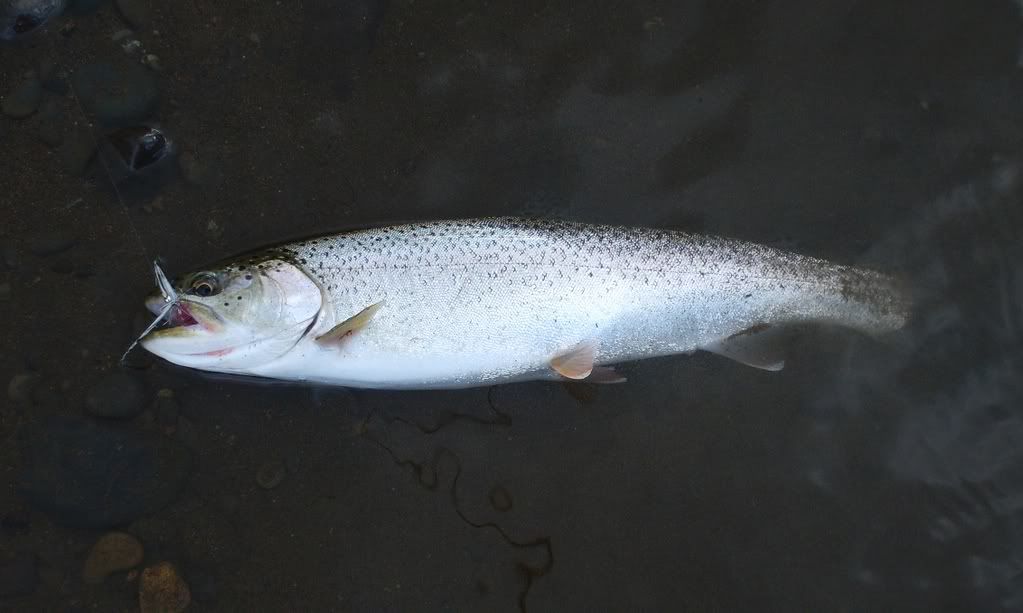
So off to destination number three namely the Kilchis river which is just north of Tillamook. I tried casting my spider under all the obvious cutthroat holding spots with no luck and was actually thinking of heading back over the hill. I let me fly dangle right off the part of the run where the riffle drops into a deeper hole when my dream coastal cutthroat trout hit! He was at least eighteen inches and possibly more. The great thing was I could actually see his efforts to spit the fly because the water was very clear so I had a front row view of the whole battle. He never broke water once and his fight was reminiscent of a small chinook in that he was constantly shaking his head. As I slid him up into the shallows to remove the fly he came unhooked and swam casually off into the deep none the worse for wear. A perfect release and a truly memorable fish that I will never forget.

I try to get my fish in as soon as possible so as not to overly tax them and therefore hurt them. I wish more people would do this along with not lifting the fish out of the water whenever possible. I know by doing this that I can assure that fishes survivability.
So with the sun quickly setting on the coast I made a few more casts but no takers. It was a great day and a great week for me and the trout I love so much.
Why there are those that insist on pursuing cutthroat trout by using bait is beyond me! These fish, to a fault, are very aggressive and there is never a need to use bait. I think those that would have to resort to the use of bait for a "zero" retention fishery are soulless egomaniacs that don't understand the big picture in wild fish conservation.
Friday, May 04, 2007
One Day Your Gonna Wake Up, America
Some might say that the following article is too pessimistic and they might be right. I however, think it's a dose of reality to all of us. I love this country but that does not mean I'm going to just buy into everything the government and especially this God awful administration is trying to get us to believe.
By David Michael Green
One day you're gonna wake up, America.
And, like every other one since last you can remember, it's gonna be an ugly morning.
One day you're gonna wake up and go to your lousy job with its lousy salary and non-existent benefits. You might even remember the good job you once had. Or that the government you once supported gave tax breaks to companies like the one that exported that good job of yours to the Third World (which is what they're now starting to call your country). Or that that same government undermined the labor unions which fought to get you your good wages and benefits.
One day you're gonna wake up and be furious at the monstrous tax burden you are carrying, a tab which accounts for fifty of the seventy hours you must work each week just to eke by. You might even figure out why your tax bill is so high. You might remember that the government you once supported shifted the tax burden from the rich onto people like you, and from the taxpayers of the time onto those of today. And that they borrowed money in astonishing quantities to fund their sleight-of-hand, so that you work thirty hours a week just to pay the interest on a mountain of money borrowed decades ago.
One day you're gonna wake up in anger at the absurdly poor education your children are receiving. You're gonna remember that it wasn't always that way, that even after the military's voracious appetite was temporarily sated, your country still managed to find a few bucks to at least educate a workforce. No more. And you're gonna remember how you applauded when your educational system was twisted in to a test taking industry that is careful, above all, not to teach children how to think.
One day you're gonna wake up literally sick and tired. You're gonna want treatment for your maladies but you won't be able to touch the cost. You're gonna wonder what you were thinking when believed your country had the best health care system in the world, even though it was the only advanced democracy in the world that didn't provide universal care, even though it devoted fifty percent more of its economy than those other countries to pay for a system that left fifty million people uninsured, and even though there were massive layers of unnecessary and harmful private sector bureaucracy skimming hundreds of billions of dollars of profits out of the system in the name of free enterprise.
One day you're gonna wake up too tired to go to work anymore. You're gonna want to retire in dignity but will be left instead to laugh bitterly at the cruelty of that joke. And you're gonna wonder what in the world you had been thinking voting for a president who's primary goal was to allow Wall Street to raid Social Security, destroying what had once been considered the most successful domestic program in human history.
One day you're gonna wake up and wish that it wasn't so bloody hot, and that there weren't so many diseases and species eradications and violent storms lashing the planet. And maybe you'll even remember that you once supported a government that lied about the very existence of global warming - back when it might have been curtailed - a government that scuttled the barest remedy for the problem in order to protect oil company profits.
One day you're gonna wake up and wish you had a government that could simply and competently do the basic things it was designed for. A government that could protect you from foreign attack, that could come to your rescue after a devastating hurricane, that could properly manage a new program or other people's security. An administration that didn't pervert the purpose of every agency within the government to its opposite, using civil rights lawyers to fight civil rights, for example, or the EPA to protect polluters.
One day you're gonna wake up and cry out for simple justice, blindly applied without bias. And perhaps you'll remember when that principle died. When your country stood by and watched the politicization of its judicial system for purposes of partisanship, and said nothing. When it stood by and watched its highest law enforcement officials in the land lie about their failing memory of events and pretended to believe that was acceptable.
One day you're gonna wake up and wish that you weren't being drafted to go fight wars you don't believe in. You'll remember how soldiers were sent to their deaths for lies. You'll remember how badly they were treated when they came home maimed and twisted. You'll remember how real, patriotic, former soldiers were mocked and humiliated by dress-up, unpatriotic, former non-soldiers. And suddenly you'll understand why no one would volunteer for the military anymore, and why people like you had to be drafted.
One day you're gonna wake up and want very badly to run outside and scream in anger about a government that long ago stopped serving your interests in favor of the narrow interests of a tiny oligarchy. But instead you'll stay inside and keep your scream tucked safely in your belly. Because you'll know that in your country dissent has long since been outlawed, on pain of torture and death. You'll remember concepts like due process, limitations on government search, seizure and wiretapping, habeas corpus, trial by peers, legal representation and prohibitions against cruel and unusual punishment as historical artifacts no longer even taught in schools.
On day you're gonna wake up and want so badly to change governments. You're gonna treasure the concept of democracy like no Soviet dissident ever did. You're gonna crave the opportunity to own your own government, to make your own societal choices, to make a change of direction never before so desperately necessary. And you're gonna wonder why you didn't speak up as you watched first-hand the dismantling of the democracy you had been handed by previous generations of patriots. You're gonna wish you had been patriotic enough yourself to demand, above all else, free and fair elections, and you're gonna shake your head in puzzlement at how you stood by watching in silence those that patently were not.
One day you're gonna wake up and want to get the hell out of your rotting, repressive country. You're gonna remember a time when that wasn't true. But, oddly enough, you'll find that other countries remember too. They'll remember your country's arrogance, its unilateralism, its walls, its racism, and its politicized abuse of immigrants. And they'll remember how your government undermined and violently replaced theirs whenever corporations from your country had their profits threatened. You're gonna want to leave, but there will be nowhere you'll be welcome. You're gonna find out that walls can face both directions.
One day you're gonna wake up in a hostile world where your country no longer has any friends. There will be governments of other countries - former long-standing allies - that cannot afford to have anything to do with you, lest their publics angrily remove them from office for collaborating with a country as hated as yours. Nor will those governments trust yours anyway. They will perhaps possess intelligence that could save your life, but they will not share it. They will possess forces that could help you survive real security threats, but they will not provide them. Your country will have become an international pariah, the South Africa of the twenty-first century.
And because no one will assist you, one day you're gonna wake up fearing for your life as your country is brutally attacked by angry militants deploying weapons of mass destruction against your cities. Long dormant connections in your brain will resurface, and you will dimly understand why. On this day - perhaps March 20, 2023 - you might be assisted in your comprehension by the message of one of the attackers, someone whose family your country callously destroyed in its mission accomplished in Iraq, and who spent the next twenty years plotting this day's revenge. And you will wonder again why you stood by as your country attacked Iraq on a completely bogus pretext. You'll remember applauding when this mailed fist was long ago sent. And, just as it comes hurling back in your direction at a lethal velocity, stamped "Return to Sender", you'll wonder what you were thinking. And you'll realize just how much you weren't.
One day you're gonna wake up, America, and you're gonna find out what was happening while you were sprawled on the couch watching endless mind-numbing loops of CSI, Desperate Housewives or Dancing with the Stars.
One day you're gonna wake up and realize that catching all the action during week seven of the 2011 NFL season really wasn't so critical in the greater scheme of things after all.
One day you're gonna wake up and wished you'd invested a little more energy into monitoring and choosing the people who made monumental decisions on your behalf.
One day, with a flash of remorse greater than you thought it possible that one human vessel could contain, you'll remember the ignored warning shots across your bow. Moments later, you'll discover the human capacity for searing remorse is actually even greater still, as you contemplate your inattention even to the shots that were fired right through the bow. With a fury you would yesterday have thought yourself incapable of, you'll hurriedly attempt to affix Band-Aids to the tattered splinters remaining from your country's once sturdy hull. But you'll learn quickly the toll of those years spent wasted in a civic coma. You'll find that no amount of patchwork can any longer save this sinking ship from its appointment with the dustbin of history.
In shame, you'll regret the callous arrogance with which you laughingly dismissed those who sounded the early clarion call. "We are destroying ourselves", they tried to tell you. But even on the rare occasion when you roused yourself from your stupor long enough to learn the slightest bit about the very threats that jeopardized your life and that of your species, still you found it more reassuring to follow the blustering worst amongst us, with their patently absurd pretended confidence, and their ever constant resort to the cheapest of false solutions, and the rudest of demeanors.
One day, you'll desperately search for hope of any sort, but none will remain. Nothing will be left to save you.
One day you'll realize that once there were solutions, but that that day is now long past. You'll see that human technological capacity ran its evolutionary race with wisdom, and the latter came in second. You'll sadly realize that you stood by while your country led the once great tool-making species to its own destruction.
One day you're gonna wake up, America, and realize how far it's all gone. But if that day isn't very soon, it won't matter.
Because one day you're gonna wake up, and it will be far, far too late.
By David Michael Green
One day you're gonna wake up, America.
And, like every other one since last you can remember, it's gonna be an ugly morning.
One day you're gonna wake up and go to your lousy job with its lousy salary and non-existent benefits. You might even remember the good job you once had. Or that the government you once supported gave tax breaks to companies like the one that exported that good job of yours to the Third World (which is what they're now starting to call your country). Or that that same government undermined the labor unions which fought to get you your good wages and benefits.
One day you're gonna wake up and be furious at the monstrous tax burden you are carrying, a tab which accounts for fifty of the seventy hours you must work each week just to eke by. You might even figure out why your tax bill is so high. You might remember that the government you once supported shifted the tax burden from the rich onto people like you, and from the taxpayers of the time onto those of today. And that they borrowed money in astonishing quantities to fund their sleight-of-hand, so that you work thirty hours a week just to pay the interest on a mountain of money borrowed decades ago.
One day you're gonna wake up in anger at the absurdly poor education your children are receiving. You're gonna remember that it wasn't always that way, that even after the military's voracious appetite was temporarily sated, your country still managed to find a few bucks to at least educate a workforce. No more. And you're gonna remember how you applauded when your educational system was twisted in to a test taking industry that is careful, above all, not to teach children how to think.
One day you're gonna wake up literally sick and tired. You're gonna want treatment for your maladies but you won't be able to touch the cost. You're gonna wonder what you were thinking when believed your country had the best health care system in the world, even though it was the only advanced democracy in the world that didn't provide universal care, even though it devoted fifty percent more of its economy than those other countries to pay for a system that left fifty million people uninsured, and even though there were massive layers of unnecessary and harmful private sector bureaucracy skimming hundreds of billions of dollars of profits out of the system in the name of free enterprise.
One day you're gonna wake up too tired to go to work anymore. You're gonna want to retire in dignity but will be left instead to laugh bitterly at the cruelty of that joke. And you're gonna wonder what in the world you had been thinking voting for a president who's primary goal was to allow Wall Street to raid Social Security, destroying what had once been considered the most successful domestic program in human history.
One day you're gonna wake up and wish that it wasn't so bloody hot, and that there weren't so many diseases and species eradications and violent storms lashing the planet. And maybe you'll even remember that you once supported a government that lied about the very existence of global warming - back when it might have been curtailed - a government that scuttled the barest remedy for the problem in order to protect oil company profits.
One day you're gonna wake up and wish you had a government that could simply and competently do the basic things it was designed for. A government that could protect you from foreign attack, that could come to your rescue after a devastating hurricane, that could properly manage a new program or other people's security. An administration that didn't pervert the purpose of every agency within the government to its opposite, using civil rights lawyers to fight civil rights, for example, or the EPA to protect polluters.
One day you're gonna wake up and cry out for simple justice, blindly applied without bias. And perhaps you'll remember when that principle died. When your country stood by and watched the politicization of its judicial system for purposes of partisanship, and said nothing. When it stood by and watched its highest law enforcement officials in the land lie about their failing memory of events and pretended to believe that was acceptable.
One day you're gonna wake up and wish that you weren't being drafted to go fight wars you don't believe in. You'll remember how soldiers were sent to their deaths for lies. You'll remember how badly they were treated when they came home maimed and twisted. You'll remember how real, patriotic, former soldiers were mocked and humiliated by dress-up, unpatriotic, former non-soldiers. And suddenly you'll understand why no one would volunteer for the military anymore, and why people like you had to be drafted.
One day you're gonna wake up and want very badly to run outside and scream in anger about a government that long ago stopped serving your interests in favor of the narrow interests of a tiny oligarchy. But instead you'll stay inside and keep your scream tucked safely in your belly. Because you'll know that in your country dissent has long since been outlawed, on pain of torture and death. You'll remember concepts like due process, limitations on government search, seizure and wiretapping, habeas corpus, trial by peers, legal representation and prohibitions against cruel and unusual punishment as historical artifacts no longer even taught in schools.
On day you're gonna wake up and want so badly to change governments. You're gonna treasure the concept of democracy like no Soviet dissident ever did. You're gonna crave the opportunity to own your own government, to make your own societal choices, to make a change of direction never before so desperately necessary. And you're gonna wonder why you didn't speak up as you watched first-hand the dismantling of the democracy you had been handed by previous generations of patriots. You're gonna wish you had been patriotic enough yourself to demand, above all else, free and fair elections, and you're gonna shake your head in puzzlement at how you stood by watching in silence those that patently were not.
One day you're gonna wake up and want to get the hell out of your rotting, repressive country. You're gonna remember a time when that wasn't true. But, oddly enough, you'll find that other countries remember too. They'll remember your country's arrogance, its unilateralism, its walls, its racism, and its politicized abuse of immigrants. And they'll remember how your government undermined and violently replaced theirs whenever corporations from your country had their profits threatened. You're gonna want to leave, but there will be nowhere you'll be welcome. You're gonna find out that walls can face both directions.
One day you're gonna wake up in a hostile world where your country no longer has any friends. There will be governments of other countries - former long-standing allies - that cannot afford to have anything to do with you, lest their publics angrily remove them from office for collaborating with a country as hated as yours. Nor will those governments trust yours anyway. They will perhaps possess intelligence that could save your life, but they will not share it. They will possess forces that could help you survive real security threats, but they will not provide them. Your country will have become an international pariah, the South Africa of the twenty-first century.
And because no one will assist you, one day you're gonna wake up fearing for your life as your country is brutally attacked by angry militants deploying weapons of mass destruction against your cities. Long dormant connections in your brain will resurface, and you will dimly understand why. On this day - perhaps March 20, 2023 - you might be assisted in your comprehension by the message of one of the attackers, someone whose family your country callously destroyed in its mission accomplished in Iraq, and who spent the next twenty years plotting this day's revenge. And you will wonder again why you stood by as your country attacked Iraq on a completely bogus pretext. You'll remember applauding when this mailed fist was long ago sent. And, just as it comes hurling back in your direction at a lethal velocity, stamped "Return to Sender", you'll wonder what you were thinking. And you'll realize just how much you weren't.
One day you're gonna wake up, America, and you're gonna find out what was happening while you were sprawled on the couch watching endless mind-numbing loops of CSI, Desperate Housewives or Dancing with the Stars.
One day you're gonna wake up and realize that catching all the action during week seven of the 2011 NFL season really wasn't so critical in the greater scheme of things after all.
One day you're gonna wake up and wished you'd invested a little more energy into monitoring and choosing the people who made monumental decisions on your behalf.
One day, with a flash of remorse greater than you thought it possible that one human vessel could contain, you'll remember the ignored warning shots across your bow. Moments later, you'll discover the human capacity for searing remorse is actually even greater still, as you contemplate your inattention even to the shots that were fired right through the bow. With a fury you would yesterday have thought yourself incapable of, you'll hurriedly attempt to affix Band-Aids to the tattered splinters remaining from your country's once sturdy hull. But you'll learn quickly the toll of those years spent wasted in a civic coma. You'll find that no amount of patchwork can any longer save this sinking ship from its appointment with the dustbin of history.
In shame, you'll regret the callous arrogance with which you laughingly dismissed those who sounded the early clarion call. "We are destroying ourselves", they tried to tell you. But even on the rare occasion when you roused yourself from your stupor long enough to learn the slightest bit about the very threats that jeopardized your life and that of your species, still you found it more reassuring to follow the blustering worst amongst us, with their patently absurd pretended confidence, and their ever constant resort to the cheapest of false solutions, and the rudest of demeanors.
One day, you'll desperately search for hope of any sort, but none will remain. Nothing will be left to save you.
One day you'll realize that once there were solutions, but that that day is now long past. You'll see that human technological capacity ran its evolutionary race with wisdom, and the latter came in second. You'll sadly realize that you stood by while your country led the once great tool-making species to its own destruction.
One day you're gonna wake up, America, and realize how far it's all gone. But if that day isn't very soon, it won't matter.
Because one day you're gonna wake up, and it will be far, far too late.
Monday, April 30, 2007
Coastal hatcheries?....Close 'em !!!
I've touched on this before and apparently the spectre of the Trask and Salmon River hatcheries closing has raised it's head again.
Oh those harvest minded folks in Tillamook county and participants of the most popular gear fishing website will cry "foul". No doubt certain Tillamook county good old boys will try to rally the troops against these closures because it may interfere with their pet projects....well to damn bad!

Coastal hatcheries, specifically the ones in Tillamook county are the models of waste and inefficiency. The deferred maintenance costs have made these hatcheries outdated and obsolete and they should be razzed into non-existence. This is the opportunity to finally rid ourselves of the stream polluting money holes these facilities have become.
Remember the cry and outrage from a few years ago about these same hatcheries? This time let's close them and if Tillamook county just has to have it's hatchery raised salmon and steelhead then those eggs can be reared by some other facility.
Myself, I would like to see an end to all hatcheries on the north coast and the wild spawning populations given a chance to rebound so this may be the opportunity for those wild fish to do just that.
I would rather see that Oregon general fund money that was spent on these wasteful hatcheries be spent on wild fish enhancement projects and habitat restoration instead of making sure guides have fish to harvest during the later winter months where historically they've never fished before until the steelhead broodstock programs were started. Let's close the coastal rivers in the heat of the summer and put an end to the ridiculous summer steelhead hatchery plants where the vast majority of fish go unharvested and so since that is the case then why even bother to keep pouring money into that program?
When you get right down to it the selfishness and greed of some is what keeps these programs afloat and it's my opinion that it's time to end it.
Oh those harvest minded folks in Tillamook county and participants of the most popular gear fishing website will cry "foul". No doubt certain Tillamook county good old boys will try to rally the troops against these closures because it may interfere with their pet projects....well to damn bad!
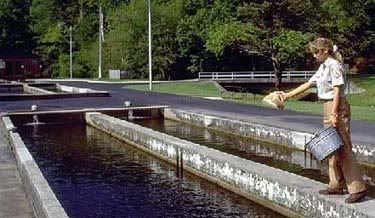
Coastal hatcheries, specifically the ones in Tillamook county are the models of waste and inefficiency. The deferred maintenance costs have made these hatcheries outdated and obsolete and they should be razzed into non-existence. This is the opportunity to finally rid ourselves of the stream polluting money holes these facilities have become.
Remember the cry and outrage from a few years ago about these same hatcheries? This time let's close them and if Tillamook county just has to have it's hatchery raised salmon and steelhead then those eggs can be reared by some other facility.
Myself, I would like to see an end to all hatcheries on the north coast and the wild spawning populations given a chance to rebound so this may be the opportunity for those wild fish to do just that.
I would rather see that Oregon general fund money that was spent on these wasteful hatcheries be spent on wild fish enhancement projects and habitat restoration instead of making sure guides have fish to harvest during the later winter months where historically they've never fished before until the steelhead broodstock programs were started. Let's close the coastal rivers in the heat of the summer and put an end to the ridiculous summer steelhead hatchery plants where the vast majority of fish go unharvested and so since that is the case then why even bother to keep pouring money into that program?
When you get right down to it the selfishness and greed of some is what keeps these programs afloat and it's my opinion that it's time to end it.
Sunday, April 22, 2007
Happy Earth Day
Here we are some 37 years after the first earth day in 1970. Have we made progress in those 37 years? Maybe some but it's for sure that we have a long ways to go. Face it folks global warming is a fact! It's inescapable and irrefutable and most of all it's not political. Unfortunately those who believe that the earth is our "whore" to screw at our pleasure will not accept the fact that we have contributed greatly to global warming. Why is it we, as Americans, think we have all the answers and we know what is best for the entire world? Surely there must be other smart people in other countries! Well the Bush administration made it very clear from the beginning that our environmental laws are fine as long as they don't keep multinational corporations from making billions.

Oh they use cute sayings like "Clean Water Initiative" and other deceptive sayings but the fact remains that this administration continues to try to water down the ESA, propose the opening of the Arctic Wildlife Refuge for oil drilling and open national forest for logging and roads not to mention not listening to sound environmental science.
The battle for the Metolius is just another example of what is happening for the sake of profit.
I happen to think out rivers and lakes and wilderness areas are our gift to our children and grandchildren and so doesn't it make sense to do all we can to protect them? We owe it to them.

Oh they use cute sayings like "Clean Water Initiative" and other deceptive sayings but the fact remains that this administration continues to try to water down the ESA, propose the opening of the Arctic Wildlife Refuge for oil drilling and open national forest for logging and roads not to mention not listening to sound environmental science.
The battle for the Metolius is just another example of what is happening for the sake of profit.
I happen to think out rivers and lakes and wilderness areas are our gift to our children and grandchildren and so doesn't it make sense to do all we can to protect them? We owe it to them.
The Quiet Pool Moment of Adorable
I've been pretty preachy as of late because of the various issues that are important to me so it's time for a moment of unadulterated cuteness.
Here are two of my grandchildren. Conner Allan Stewart and Heidi Anne Stewart who is proudly wearing the family tartan by the way. They live in far off Medford, Oregon and we don't get to see them as much as we would like but this coming Memorial Day we will.
I'll bet those of you that know me think that there is nothing that can melt my gruff old heart..... Well these two can

Here are two of my grandchildren. Conner Allan Stewart and Heidi Anne Stewart who is proudly wearing the family tartan by the way. They live in far off Medford, Oregon and we don't get to see them as much as we would like but this coming Memorial Day we will.
I'll bet those of you that know me think that there is nothing that can melt my gruff old heart..... Well these two can

Saturday, April 14, 2007
Our Responsibility

North Fork Umpua River looking upstream from Mott Bridge
I've been thinking about this topic for quite awhile and just couldn't get into words what I wanted to say.
Do we, as anglers and outdoor enthusiasts, have a responsibility to be good stewards over the natural resources we enjoy? Or are we just users of that resource, never putting anything back.
I know as for myself I could do a lot more than I do. I could spend the day cleaning up stream side garbage or donating money to groups that fight for what we take for granted. I, as a retired person, could volunteer more of my time to the things I hold dear.
I believe we Americans have what I call the "Costco" mentality. Those of you that have shopped at Costco know what I am talking about if you've ever been there on a busy Saturday afternoon. We see aisle after aisle of all this merchandise and it's too much for our senses to take in. We feel we better push and shove in order to get all we think we need or are entitled to because it just may not be there next week.
I see the same type of behavior when it comes to our rivers and lakes. We feel entitled to what is there like it's owed to us or something and therefore it's ours to plunder. Forget about doing anything to actually makes things better because it's our God given right to take all the earth has to offer.
That type of thinking is abhorrent! Anyone who thinks that has no soul as far as I'm concerned.
So go ahead and call me a salmon hugger or tree hugger or whatever but I happen to think that we have some places in this country and this world that are worth saving! Places that should be preserved and not looked upon as a way to generate revenue and make some international corporation wealthy.
Ask yourself this...do you have just a little time or even money to give back to the things in the outdoors that mean so much? Or are you just a user and feel it's all owed to you?
Thursday, April 12, 2007
Save The Metolius....Update
I wrote my state senator Bruce W. Starr and asked him to support SB30 which would prohibit the construction of destination resorts within the Metolius basin and here is the response I got from him.
Dear Shane,
Thank you for the email.
I am hesitant to support SB 30 and bypass the local process that
is currently underway. I appreciate your writing and will watch the
bill. It may be amended and I could modify my view of the bill.
Sincerely,
Bruce W. Starr
Oregon State Senate
District 15
Here is my response back to him
Thank you for responding Sen. Starr but I cannot agree that this should be handled on the local level. Apparently the local county government is the one trying to push these zoning changes in order to accommodate the construction of these destination resorts. The Metolius is one of the real special places in Oregon and it would be a shame to see it ruined for the sake of a golf course and resort. The general public in Oregon cannot afford to stay at Central Oregon resorts like Sun River or Black Butte Ranch but the natural beauty of the Metolius basin is something everyone can enjoy. I urge again to please consider supporting SB30.
Sincerely,
Shane Stewart
Hillsboro, OR.
Being the son of a former republican state senator Charles Starr and land owner here in Washington County I did not expect much from Sen. Starr and so I was not disappointed. His father did a lot of zoning law hocus-pocus and I expect no different from the son.
By letting the local Jefferson County government settle this he is basically giving his blessing to what they are trying to do.
Any of you that love this river and wilderness area should contact your state senator and express your concern.

Dear Shane,
Thank you for the email.
I am hesitant to support SB 30 and bypass the local process that
is currently underway. I appreciate your writing and will watch the
bill. It may be amended and I could modify my view of the bill.
Sincerely,
Bruce W. Starr
Oregon State Senate
District 15
Here is my response back to him
Thank you for responding Sen. Starr but I cannot agree that this should be handled on the local level. Apparently the local county government is the one trying to push these zoning changes in order to accommodate the construction of these destination resorts. The Metolius is one of the real special places in Oregon and it would be a shame to see it ruined for the sake of a golf course and resort. The general public in Oregon cannot afford to stay at Central Oregon resorts like Sun River or Black Butte Ranch but the natural beauty of the Metolius basin is something everyone can enjoy. I urge again to please consider supporting SB30.
Sincerely,
Shane Stewart
Hillsboro, OR.
Being the son of a former republican state senator Charles Starr and land owner here in Washington County I did not expect much from Sen. Starr and so I was not disappointed. His father did a lot of zoning law hocus-pocus and I expect no different from the son.
By letting the local Jefferson County government settle this he is basically giving his blessing to what they are trying to do.
Any of you that love this river and wilderness area should contact your state senator and express your concern.

Sunday, April 08, 2007
No More Wild Fish?

Were you guys aware of that? Gee I wish someone would have informed the rest of us ignorant people
Here are some quotes from gear/bait oriented NW fsihing website that shall remain nameless.
As far as I'm concerned, the descendants of the hatchery fish in the rivers are natives once again. I don't know that we should take fish from one river and put them in another, but I don't know how much that would hurt, either. I'm sure some natives find new rivers to spawn in naturally
It gets better folks! Here is more brilliance
So we should let all fish spawn in the rivers, triple our hatchery output and start eating everything. I can tell you fish with fins taste just like the ones without.
Then these pearls of wisdom
The hippies like to say wild fish are genetically different, and their right! boys and girls are genetically different, everybody is genetically different, but we are all the same species! its just a way to split hairs, and spin the truth. saying that hatchery fish are inferior and should be destroyed is insane, it just pushes an agenda. funny thing is if you look carefully their beliefs parallel those who want a "pure" or "superior" race, the same who believe people who suffer from genetic defects such as retardation do not deserve a chance. don't get me wrong, I'm in no way putting the same value on fish as humans, just trying to illustrate the same flawed thinking! but then again I know a few people lower than squawfish!!!
Forunately there are people out there that know better and are the voice of reason. The quote below is from someone within the same thread. It shows that there are some that believe in the importance of strong native fish populations.
Too imply that there are no longer native fish, is also pushing an agenda.
There are still native fish. There are watersheds/tribs that were never stocked. There are creeks and streams with wild native spawning fish.
And, you didn't say just salmon. There are most definitely native trout in this state and they are amazingly different and adapted to their river system.
If you stay focused only on the biggest rivers, the biggest producers, you might see more hatchery fish, cause that's where we focused hatcheries. The little waters are still there. They still have natives. I hope we will always have native fish.
So what point am I trying to make? Simply this! There is a lot of ignorant and uncaring people out there that think any natural resource is just ours to plunder as we see fit. That kind of thinking has gotten us to the where we are today. We are perched precariously on the cliff of extinction of native fish runs...sorry for the pessimism but there it is. If not for groups like Native Fish Society, Oregon Trout and others we would be plunging headlong over that cliff and into the abyss.
There are also a lot of uneducated folks out there that just don't know what is true or false.
We need to do our best to inform them and not let them fall for the lies those "arm chair" biologists try to spread.
Sorry for the preaching but this kind of stuff really get's my blood up.
Saturday, March 31, 2007
Save The Metolius
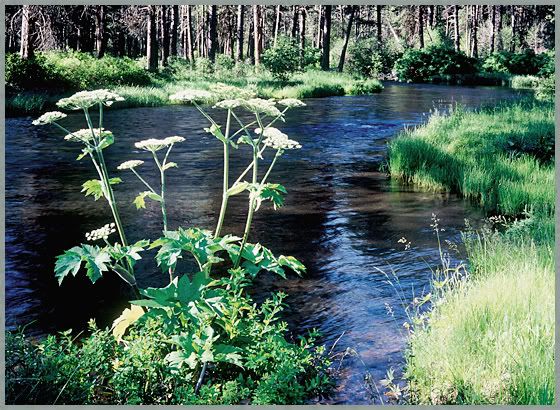
Any of you that have fished this river know what a special place it is. You can fish there and not touch a fish all day but feel like your day on the "Met" was one of your best days of fishing ever.The Metolius is just that kind of river!
So here we go again! Another threat by those with no soul and those who care for nothing but their pocket book! Friends we might as well face the fact that this kind of stuff is something we will always have to deal with as long as there is pristine and unspoiled waters.
The following is from Joel LaFollette's Royal Treatment Fly Fishing website
Once again greedy politicians are trying to steal from the public. This time it’s a group of county commissioner looking to cash in on county owned land in the Metolius basin. They’re proposing a sale of two pieces of county owned land for development into destination resorts. One piece of land rests on the hill on the east side of the Metolius basin. This is not where Oregon needs another golf course.
The Metolius basin is a special ecosystem that needs to be protected from this type of development. It is a fragile balancing act that nature has carried on for a millennium and we have already tipped the scales on more than one occasion. It has taken generations to understand how we affect our planet and the Metolius basin and the clear, cold river that flows through it have helped us with that understanding. We have learned that nature does a better job of fish production that we do. We have learned that water quality is important to all living things and is more expensive to restore than protect. We spend millions now to rebuild watersheds and the process takes time. Protection of a watershed offers instant results.
The environmental impact from water use, increased traffic, loss of habitat, chemical run off, increased fire danger and other issues make this a risky proposal for such a delicate area. It is not worth the risk. Jefferson County is facing hard times. Employers are moving out of the county and unemployment is high. Commissioners are looking for a quick fix. That’s not the right way to do anything. You just set yourself up to have to do it all over again the right way. It ends up costing much more. The number of family wage jobs destination resorts bring to an area is minimal. Housing for the workers willing to take the lower paying jobs doesn’t exist. You only have to go as far as Bend to see that there are not enough workers to fill those lower wage jobs. The cost of housing is too high to support a minimum wage work force.
The commissioners are really only looking to increase the county’s tax base. They are not really concerned with the employment picture of their county. Of course to the unemployed worker it seems like there is hope in this proposal, but it is false hope. There will be no winners if these proposed resorts are allowed to be built. In fact we will all lose. Oregonians will have lost one of the most special places in their state. All for a few pieces of fools gold.
For more information on what you can do go to www.savethemetolius.org
Sunday, March 25, 2007
The Joys of Trout...Cutthroat that is!
With apologies to Arnold Gingrich for plagiarizing the title of his classic fly fishing book I felt compelled to discuss with the myriad of you fans of the "Quiet Pool" why I am attracted to these fish!

First of all they are the last wild coastal trout on the west coast not counting Alaska. Very little is really known about their habits and whether some or maybe all try to migrate to saltwater. And just what do they do in salt water? Do they stay in the estuary or do the full ocean thing of their salmonid cousins. Again not much data there for us to cling to except for the volumes of information we do not know about these wonderful trout.
For you that have actively fly fished for them know the ferocity they will attack a fly whether it be on the surface or sub-surface or deeply sunk. For the life of me I cannot fathom the need to fish a deeply sunken fly for these fish but to each his own I guess.
What I do know is what they mean to me. They mean a warm summer evening on my favorite coastal tributary where I can lose myself pursuing them. I seldom see any one else fishing for them and that is just fine although I like nothing better than introducing other fly fishers to them....go figure!
They also mean the wistful end of summer when the leviathans of west coast fresh water fishing, namely chinook salmon, start their death journey up their rivers of birth.
It signals the end of the cutthroat season on the north coast and the beginning of the long dreary months of fall and winter in the Pacific Northwest. It's a time of year I dread and find myself getting nostalgic at that time of year because it also marks the conclusion of those warm days on the Deschutes.
So here I am about two or so months away from the Memorial Day opener. There won't be any big rush to the coast by the Portland Metro hordes (Thank God) but the fact that there are some who think this trout should be made harvestable makes me sick! As does those who think it's great sport to use bait and small hooks for these fish!
This winter I've seen many large and robust cutthroat trout as I pursue winter steelhead so that makes me optimistic for the coming season. So it's back to the tying bench because you never know how many Reverse Spiders I might need this year.

First of all they are the last wild coastal trout on the west coast not counting Alaska. Very little is really known about their habits and whether some or maybe all try to migrate to saltwater. And just what do they do in salt water? Do they stay in the estuary or do the full ocean thing of their salmonid cousins. Again not much data there for us to cling to except for the volumes of information we do not know about these wonderful trout.
For you that have actively fly fished for them know the ferocity they will attack a fly whether it be on the surface or sub-surface or deeply sunk. For the life of me I cannot fathom the need to fish a deeply sunken fly for these fish but to each his own I guess.
What I do know is what they mean to me. They mean a warm summer evening on my favorite coastal tributary where I can lose myself pursuing them. I seldom see any one else fishing for them and that is just fine although I like nothing better than introducing other fly fishers to them....go figure!
They also mean the wistful end of summer when the leviathans of west coast fresh water fishing, namely chinook salmon, start their death journey up their rivers of birth.
It signals the end of the cutthroat season on the north coast and the beginning of the long dreary months of fall and winter in the Pacific Northwest. It's a time of year I dread and find myself getting nostalgic at that time of year because it also marks the conclusion of those warm days on the Deschutes.
So here I am about two or so months away from the Memorial Day opener. There won't be any big rush to the coast by the Portland Metro hordes (Thank God) but the fact that there are some who think this trout should be made harvestable makes me sick! As does those who think it's great sport to use bait and small hooks for these fish!
This winter I've seen many large and robust cutthroat trout as I pursue winter steelhead so that makes me optimistic for the coming season. So it's back to the tying bench because you never know how many Reverse Spiders I might need this year.
Subscribe to:
Posts (Atom)